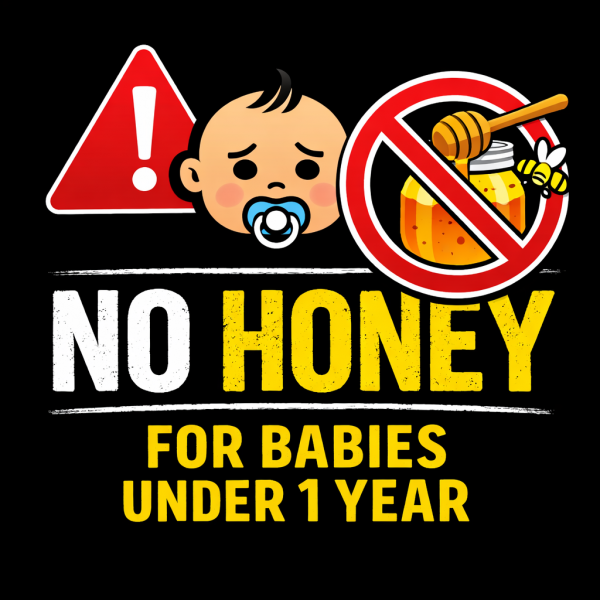
At Shuga Bee Farm, we’ve spent over 14 years producing raw, unfiltered, chemical-free honey right here in Johnston County, North Carolina. Honey is a wonderful natural food, and we’re proud of every jar that leaves our farm. But as much as we love what we do, there’s one message we never want anyone to miss: honey should never be given to children under 12 months of age.
This isn’t just our opinion — it’s the clear, consistent guidance of the Centers for Disease Control and Prevention (CDC), the American Academy of Pediatrics (AAP), and the World Health Organization (WHO). The reason comes down to a rare but serious illness called infant botulism.
⚠️ Critical Safety Reminder
Never give honey to a baby under 12 months old — not even a tiny taste, not on a pacifier, and not in cooked or baked goods prepared at home. This applies to ALL types of honey: raw, pasteurized, commercially processed, or locally produced.
What Is Infant Botulism?
Infant botulism is a serious illness caused by a toxin-producing bacterium called Clostridium botulinum. The spores of this bacterium are found naturally in soil, dust, and certain foods — including honey. While these spores are completely harmless to older children and adults, an infant’s digestive system tells a very different story.
In babies younger than 12 months, the gut has not yet developed enough beneficial bacteria to defend against C. botulinum spores. When an infant ingests these spores, they can germinate and grow inside the baby’s intestines, producing a dangerous toxin called botulinum toxin. This toxin attacks the nervous system and can cause muscle weakness, breathing difficulties, and in severe cases, can be life-threatening.
Why Aren’t Adults and Older Children Affected?
By around 12 months of age, a child’s intestinal flora is mature enough to prevent C. botulinum spores from colonizing and producing toxin. In adults and older children, the spores simply pass through the digestive system without causing harm. This is why honey is perfectly safe — and wonderfully beneficial — for anyone over one year old.
Recognizing the Warning Signs
Symptoms of infant botulism typically appear within 18 to 36 hours after a baby ingests contaminated honey, though onset can sometimes take up to 14 days. If your baby has consumed honey and you notice any of the following symptoms, seek emergency medical attention immediately:
| ▸ Constipation — often the first sign to appear | ▸ Weak cry — noticeably quieter or different-sounding |
| ▸ “Floppy” appearance — decreased muscle tone, limp limbs | ▸ Difficulty feeding — weak sucking, poor latch, drooling |
| ▸ Sluggish or flat expression — reduced facial movement | ▸ Breathing problems — shallow or labored breathing |
| ▸ Decreased movement — less active than usual overall | ▸ Difficulty swallowing — gagging or choking during feeds |
The early signs can be subtle. Constipation is often the very first indicator, sometimes appearing days before other symptoms. If your infant shows any unusual changes in behavior, feeding, or muscle tone after any potential honey exposure, contact your pediatrician right away. Early treatment leads to much better outcomes.
Common Myths and Misconceptions
“But it’s just a little bit — surely a tiny taste is fine?”
No. Even a very small amount of honey can contain enough C. botulinum spores to cause infant botulism. There is no safe amount of honey for babies under 12 months. The risk is not dose-dependent in the way many people assume — it takes only a tiny number of spores to colonize an infant’s immature gut.
“What about pasteurized or store-bought honey?”
Pasteurization kills many bacteria, but C. botulinum spores are extremely heat-resistant. Standard pasteurization temperatures used for commercial honey are nowhere near high enough to destroy these spores. This means pasteurized honey carries the same infant botulism risk as raw honey.
“Can I use honey in baked goods or cooked recipes for my baby?”
Home cooking and baking do not reliably reach the sustained temperatures needed to destroy botulism spores. Unless a product has been commercially sterilized through industrial processes — such as pressure canning at 250°F (121°C) for an extended period — you should assume honey-containing foods are not safe for infants under one year.
“Honey is natural, so isn’t it healthier than sugar for babies?”
While honey does offer health benefits for older children and adults, infants under 12 months should not consume any added sweeteners at all, according to pediatric nutrition guidelines. Breast milk and formula provide all the nutrition babies need. The “natural” quality of honey does not make it safe for developing digestive systems.
“My grandmother gave us honey as babies and we were fine.”
Infant botulism wasn’t formally identified until 1976, and awareness has grown significantly since then. Many babies who were given honey were fortunate, but some were not. We now have strong scientific evidence about the risk, and every major pediatric health organization in the world advises against giving honey to infants. It’s simply not worth the gamble.
“Can I put honey on a pacifier to soothe my baby?”
Absolutely not. This is one of the most common ways infants are accidentally exposed to honey. Even a thin coating on a pacifier introduces enough spores to pose a real danger. If your baby is fussy, consult your pediatrician about safe soothing methods.
What to Do If Your Baby Accidentally Ingests Honey
Accidents happen — a well-meaning family member or caregiver may not be aware of the risk. If your infant under 12 months has consumed honey in any form, stay calm but take the following steps:
Monitor closely for any of the warning signs listed above, especially constipation, weak cry, and poor feeding, for up to two weeks after exposure. Contact your pediatrician promptly to report the exposure, even if your baby seems fine. They may want to monitor your child or provide specific guidance. Seek emergency care immediately if your baby develops any symptoms of muscle weakness, difficulty breathing, or changes in feeding behavior.
With prompt medical treatment, most infants with botulism recover fully. The treatment — botulism immune globulin (BabyBIG) — is most effective when administered early, which is why awareness and quick action are so important.
🍯 The Good News: Honey Is Great After Age One!
Once your child turns one, their digestive system is mature enough to handle honey safely. And when that birthday arrives, we’d love for you to introduce them to real, local, raw honey. Our pure Johnston County honey — unfiltered, unheated, and chemical-free — makes a wholesome addition to your growing child’s diet. Many of our farm families have made it a tradition to celebrate the first birthday with a taste of local honey!
Spread the Word
One of the most important things you can do is share this information. Make sure everyone who cares for your baby — grandparents, babysitters, daycare providers, and family friends — knows that honey is off-limits until after the first birthday. A quick conversation now can prevent a serious medical emergency later.
At Shuga Bee Farm, we believe that being a responsible honey producer means more than just making great honey. It means making sure our community has the knowledge to enjoy it safely. We put safety information on every jar we sell, and we encourage every beekeeper and honey seller to do the same.
If you have questions about honey safety or any of our products, don’t hesitate to reach out. We’re always happy to talk bees, honey, and keeping your family safe.
— Shuga Bee Farm
Medical Disclaimer: This article is for educational purposes only and is not a substitute for professional medical advice, diagnosis, or treatment. Always consult your pediatrician or a qualified healthcare provider with questions about your child’s health. If you believe your infant may have consumed honey and is showing symptoms, call your pediatrician or seek emergency medical attention immediately. In an emergency, call 911.