
If you live in the Raleigh area and have spotted honey bees gathering at the edge of your swimming pool this summer, you are not alone—and there is no need to panic. At Shuga Bee Farm, we have spent over 14 years keeping bees across Johnston and Wake County, North Carolina, and “there are bees in my pool” is one of the most common questions we hear once the weather turns hot. The good news is that these bees are not after you, and you can gently send them elsewhere without harming a single one.
The short version: Bees in your pool are thirsty, not aggressive. They are collecting water for the hive. Give them a better water source nearby, make the pool a little less appealing, and they will move on—no pesticides required.
Why Are Bees in My Pool?
Honey bees need water just as much as they need nectar. They use it to cool the hive on hot days through evaporation, and to dilute stored honey so they can feed it to developing brood. A swimming pool is exactly what a foraging bee is looking for: a large, dependable, year-round water source that never runs dry.
Here is the part that surprises most homeowners. When a scout bee finds a good water source, she flies home and recruits her sisters to the exact same spot. Bees imprint on a reliable location, which is why a single visitor on Monday can become dozens by the weekend. They will keep returning to that pool day after day until something changes. Interestingly, the faint smell of chlorine and the minerals in pool water can make it more attractive to bees, not less.
Are the Bees Dangerous?
In almost every case, no. A bee collecting water is focused entirely on her task and is not guarding a hive, which means she is about as docile as a honey bee ever gets. These foragers very rarely sting. The best thing you can do is stay calm and avoid swatting—swatting and splashing are far more likely to provoke a defensive reaction than the bee’s quiet visit to the water’s edge. (Anyone with a known bee-sting allergy should of course keep a respectful distance.)
How to Keep Bees Out of Your Pool
You cannot really “repel” an established colony with sprays or chemicals—and you should not want to, since honey bees are protected, beneficial pollinators. The trick is to redirect them: give the bees a water source they like even better than your pool, then make the pool itself less inviting. Here is the approach we recommend, in order:
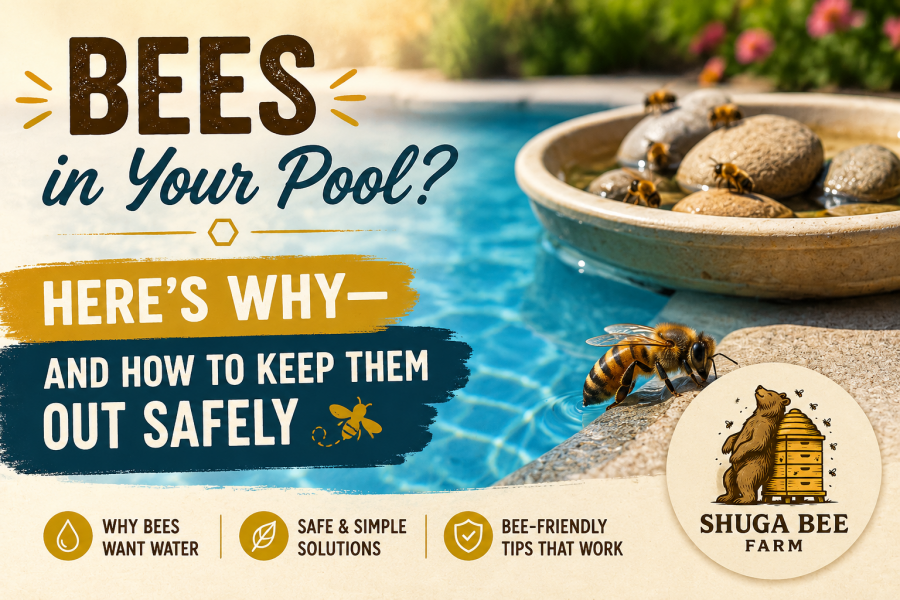
- Set up an alternate water source. Place a shallow dish, birdbath, or bucket of water about 20–30 feet from the pool, ideally somewhere sunny and sheltered from the wind. Keep it filled every single day—consistency matters more than anything fancy.
- Add safe landing spots. Bees cannot swim. Fill the container with stones, corks, marbles, or floating wine corks so they have somewhere to land and drink without drowning.
- Make it beat the pool. Add a small pinch of sea salt, or a splash of the pool water itself at first, so the new source reads as familiar. Bees frequently prefer slightly “salty” or mineral-rich water over plain clean water.
- Put it out early. Set the station out before the heat of the day and, ideally, before peak summer. Because bees imprint on a location, it is far easier to win them over before the pool becomes their established habit.
- Make the pool less appealing. Run the pump and filter during daylight hours—bees prefer still water and tend to avoid a moving surface. Keep the pool covered whenever it is not in use, and trim back any flowering plants right beside the pool that are drawing foragers into the area.
- Add a mild scent deterrent (optional). Bees dislike strong scents, so a diluted peppermint, citronella, or eucalyptus oil spray around the pool edges and furniture can help a little. Be realistic about it: it wears off fast and needs frequent reapplying, so it is a minor assist, never a standalone fix.
- Be patient. Give the colony one to two weeks of consistent alternate water to make the switch. Once they have moved over, keep that new source filled all season so they do not drift back.
Please don’t reach for the bug spray. Pesticides and insecticides will not solve a pool problem—they simply kill the foragers while the hive sends out more to replace them. Honey bee populations are already under pressure, and these are the same insects responsible for roughly a third of the food on your table. There is always a better, bee-friendly option.
For Beekeepers: Keep Your Bees Out of the Neighbor’s Pool
If you keep bees, the flip side of this issue lands squarely on us. A neighbor’s pool full of our foragers is not just their problem—it is a reflection of our beekeeping, and it is one of the fastest ways to sour the goodwill that backyard and small-farm beekeepers depend on. The single most effective thing you can do is make sure your bees never need to go looking for water in the first place.
- Provide water at the apiary before they need it. Set up a dedicated water station near your hives before the warm weather arrives and before your bees imprint on a pool down the street. Breaking an established habit is hard; preventing it is easy.
- Build a proper bee waterer. A bucket, poultry waterer, or shallow trough filled with stones, corks, or floating wood works well. Give them plenty of landing surface so nobody drowns.
- Make your water the best in the neighborhood. A pinch of sea salt or a few drops of unsulphured molasses makes apiary water more attractive than a sterile pool. Place it in the sun and close to the hives.
- Never let it run dry. Bees abandon an unreliable source and go hunting for a dependable one—which is exactly how they end up in a pool. Refresh and refill daily through the season.
- Be a good neighbor. If you hear about bees at a nearby pool, share the homeowner tips above. A friendly conversation and a free jar of honey go a long way toward keeping your community on the side of the bees.
This is the same chemical-free, bee-first philosophy we follow with every hive at Shuga Bee Farm, and it is at the heart of our work with Save the Bees NC.
When to Call for Help
If the number of bees feels overwhelming, or you have noticed a cluster of bees hanging in a tree, wall, or shed—which can mean a swarm or an established hive nearby—reach out to a local beekeeper rather than an exterminator. Many beekeepers will collect a swarm at no charge, and groups like Save the Bees NC can point you to someone in the Triangle who can help. Here in Johnston and Wake County, you are welcome to get in touch with us at Shuga Bee Farm and we will do our best to steer you in the right direction.
Frequently Asked Questions
Why are there bees in my pool?
Honey bees need water just like they need nectar. They collect it to cool the hive in hot weather and to dilute honey for feeding their young. A pool is a large, reliable water source, so foraging bees lock onto it and recruit more bees from the hive. They are not interested in people—they are simply gathering water and heading home.
Are the bees in my pool dangerous?
Foraging bees collecting water are focused on their task and very rarely sting. They are not defending a hive, so they are usually docile. Stay calm, avoid swatting, and they will go about their business. People with bee-sting allergies should still keep their distance.
Will the bees leave my pool on their own?
Usually not while the pool remains the easiest water around. Once bees imprint on a source they keep returning and recruit others. The reliable fix is to redirect them by offering a better, closer water source and making the pool less attractive.
Does peppermint oil keep bees away from pools?
Bees dislike strong scents like peppermint, citronella, and eucalyptus, so a diluted spray around the pool edges can help a little. Treat it as a minor assist, not a solution—it evaporates quickly, washes off, and will not override an established water habit. Always pair it with an alternate water source.
Should I call an exterminator for bees in my pool?
No. Honey bees are vital pollinators and are protected in many areas, and pesticides do not solve the problem—they kill foragers while the hive simply sends more. If the volume is overwhelming or you suspect a hive or swarm nearby, contact a local beekeeper or a group like Save the Bees NC, who can often help relocate them.
How long does it take to get bees to stop coming to the pool?
With a consistent alternate water source, it typically takes one to two weeks to retrain a colony. Once they have shifted, keep the new water source filled through the season so they do not come back.
As a beekeeper, how do I keep my bees out of the neighbor’s pool?
Provide clean water at your apiary before the season starts and before your bees imprint on a neighbor’s pool. Place a water station with landing spots and a pinch of salt close to your hives, keep it filled at all times, and refresh it daily. Establishing the habit early is far easier than breaking it later.
From our hives to your home. Bees work hard for every drop of water and every drop of honey. If you would like to taste what our Johnston and Wake County bees produce, browse our award-winning raw honey, learn about our Host a Hive program, or read more from the hive on our news page.
At Shuga Bee Farm, we believe being responsible stewards of our bees means helping our community understand and live alongside them. A pool full of thirsty bees is not a pest problem—it is a small, solvable misunderstanding between us and some of the hardest-working creatures in North Carolina.
— Shuga Bee Farm